
 +155 545 10 467


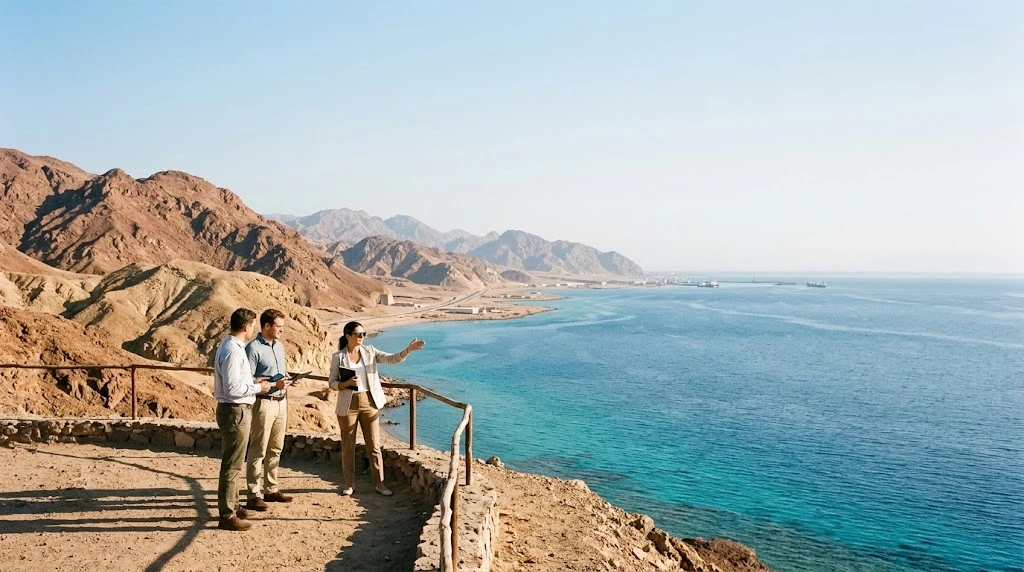
NEOM differs from other Saudi giga-projects through its regional, multi-sector masterplan, combining industrial infrastructure, urban development and tourism. Qiddiya centres on entertainment, Diriyah on heritage-led urban development, and The Red Sea on tourism. Compare their individual assets and delivery milestones: an announced masterplan does not establish completion, investment availability or foreign ownership eligibility.
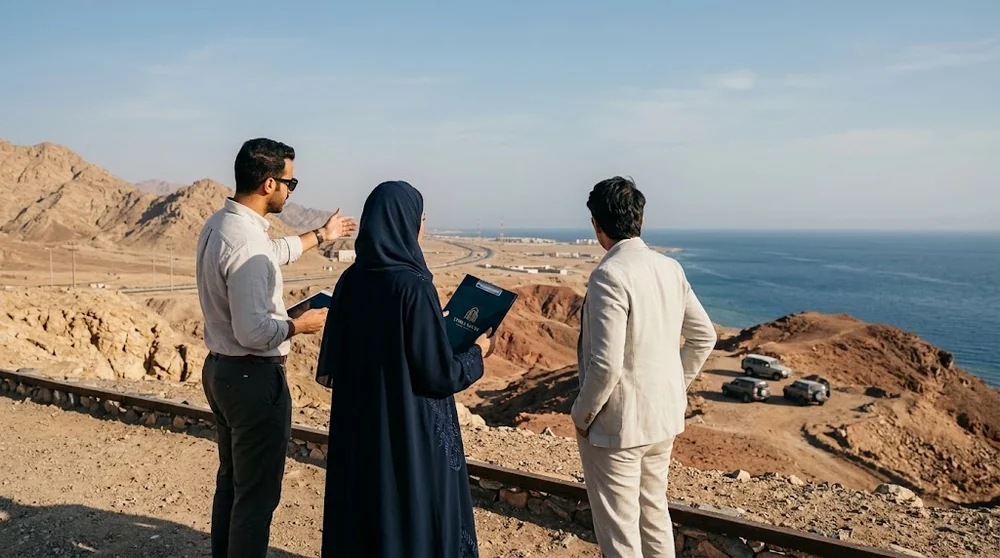
NEOM vs Other Giga-Projects at a Glance
The first step is choosing a consistent comparison unit. NEOM is a regional development programme, not a single city. Qiddiya City and Diriyah are individual masterplanned destinations in the Riyadh area. Red Sea Global is a developer responsible for two separate destinations, The Red Sea and AMAALA. ROSHN Group, a Public Investment Fund (PIF) company, develops residential communities in several Saudi cities. A developer portfolio is not a single contiguous site, so comparing its “size” with a region or a destination mixes boundaries that were never designed to be equivalent.
| Project | Comparison unit | Geography | Principal focus | Relationship to existing demand | Delivery caveat |
|---|---|---|---|---|---|
| NEOM | Regional programme acting as an umbrella for several components | Northwest Saudi Arabia on the Red Sea and Gulf of Aqaba; 26,500 km² official regional area, checked October 2026 | Industry, logistics, urban development and tourism | Largely new demand that must be created; limited existing urban catchment | Components move at different speeds; no single status describes all of NEOM |
| Qiddiya City | Single masterplanned destination | Near Riyadh; PIF describes it as spanning more than 360 km², as of October 2026 | Entertainment, sport and culture | Adjacent to the established Riyadh metropolitan market | Venues open individually; the masterplan is not complete |
| Diriyah | Heritage-led masterplanned destination | Edge of Riyadh, around the historic At-Turaif site | Heritage, hospitality, culture and mixed urban uses | Within the Riyadh metropolitan market | Diriyah Company distinguishes operating hotels from future inventory |
| Red Sea Global: The Red Sea and AMAALA | One developer with two separately identified destinations | West coast; The Red Sea’s official 28,000 km² area includes more than 90 islands; AMAALA is a distinct coastal destination | Resort tourism with supporting residential components | Visitor-led destination demand rather than an existing local catchment | Both destinations have opened individual resorts; neither is complete |
| ROSHN Group | Multi-location residential developer portfolio | Several Saudi cities, including Riyadh | Housing communities and supporting services | Serves existing urban household demand | Each community and phase must be assessed separately |
The table describes principal emphasis, not exclusive use: every masterplan includes uses beyond its anchor. What this means for investors in practice: the comparison unit determines which evidence matters, and headline scale says little about any individual property.
How NEOM’s Regional Masterplan Is Organised
NEOM’s official regions page, checked in October 2026, describes a 26,500 km² regional development area. The page foregrounds Oxagon and also presents The Line, Trojena, nature areas, Islands of NEOM and Magna. A common misunderstanding we see: readers treat the familiar four components (The Line, Oxagon, Trojena and Sindalah) as the full inventory. They are not exhaustive, and NEOM is not a synonym for The Line.
Oxagon and the port
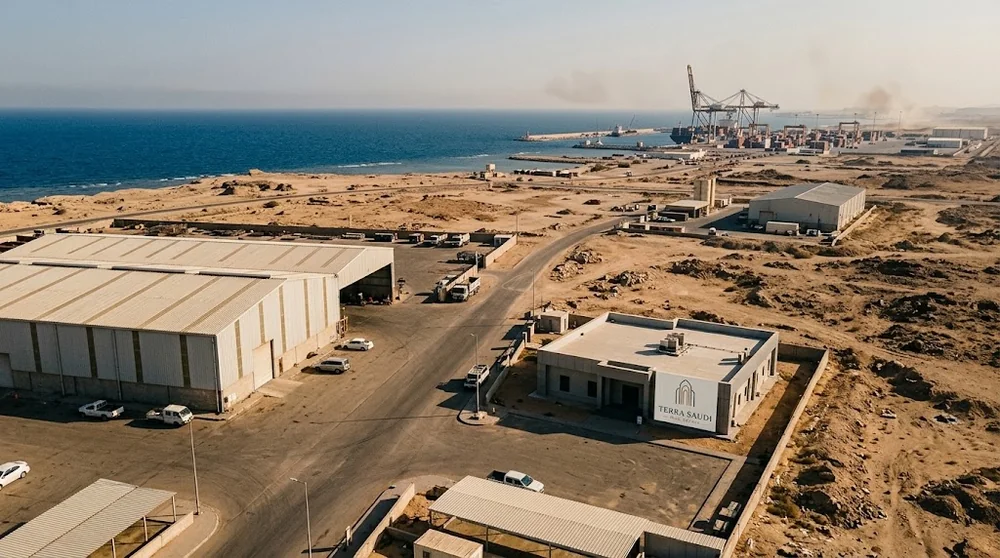
The official Oxagon page, checked in October 2026, identifies an operating port and a 48 km² core development area. That is a precise and meaningful milestone, but it is limited in scope: an operating port is not a completed industrial city. In NEOM’s stated logic, Oxagon is the industrial and logistics base that would support construction, manufacturing and supply chains across the region.
The Line
PIF’s announcement of 25 July 2022 described The Line as a linear city 170 km long, 200 m wide and 500 m high, with an eventual population of nine million. Those figures are historical announced design specifications, and their relevance was checked as of October 2026. The current official page for The Line describes phased, demand-led development. That updated wording is significant, but it does not tell readers which phase is under construction, how large it is or when it will be delivered. The historical 170 km design should not be presented as a current completion commitment.
Trojena
Trojena is NEOM’s planned mountain tourism destination and remains on the official regions page as of October 2026. The official listing confirms that Trojena is still presented as a NEOM component; it does not establish the current construction status or an opening timetable, which the section on verified delivery below treats as open questions.
Sindalah and the wider coastal portfolio
The Saudi Press Agency (SPA) reported Sindalah’s unveiling on 27 October 2024. Sindalah is an island destination within NEOM’s coastal portfolio, which the official navigation now groups with Islands of NEOM, while Magna covers a separate coastal area along the Gulf of Aqaba. The unveiling is evidence of an unveiling, not of present unrestricted access, bookable accommodation or property for sale.
The masterplan intends these parts to reinforce each other: industry and logistics supplying construction and jobs, urban areas housing workers, and tourism adding visitors and services. Those cross-sector links are intended connections, not proof of a fully integrated operating region.
NEOM Compared with Qiddiya, Diriyah and ROSHN
The core difference is the economic anchor. NEOM plans to create new demand across a remote region through several sectors at once. Its peers mostly attach a single principal anchor to an existing market or a clearly defined visitor proposition. Red Sea Global’s The Red Sea and AMAALA sit closest to NEOM geographically, but both are tourism-led destinations with resort, residential and supporting infrastructure, not multi-sector regional programmes. Their shared coastline does not make them interchangeable with NEOM or with each other.
Qiddiya City: entertainment-led development
Qiddiya City is planned around entertainment, sport and culture near Riyadh. SPA announced that Six Flags Qiddiya City would open on 31 December 2025, and in September 2026 SPA reported public celebrations across Six Flags and the Aquarabia water park, which indicates that both parks were operating for the public at that point. These are the two clearest delivered anchors in Qiddiya so far. Qiddiya’s potential property demand would come from residents, employees and visitors drawn by those venues, supported by the Riyadh catchment. Proximity to Riyadh is a factor to investigate, not proof of occupancy, profitability or lower overall risk.
Diriyah: heritage-led mixed-use development
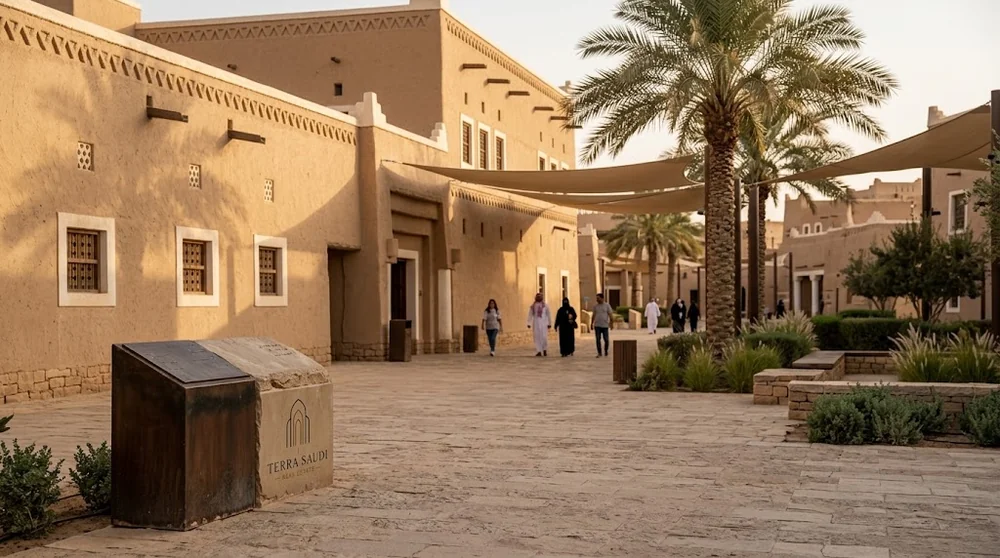
Diriyah combines the historic At-Turaif setting with hospitality, culture, retail, offices and housing. Its demand case rests on heritage tourism and on Riyadh’s existing population and business base. Diriyah Company’s hotel directory separates operating hotels, such as Bab Samhan, from future inventory, which is a helpful model for how readers should treat the whole masterplan: as a mix of delivered and planned parts.
ROSHN Group: multi-location communities
ROSHN Group is a different kind of comparison unit. Rather than one destination, ROSHN develops residential communities across several cities, serving established household demand. Its flagship Riyadh community, SEDRA, shows the evidence chain that matters here: a launch, construction of defined phases and, from 2023, handover of homes to owners. Its relevance to this comparison is as a reference point: a housing-led portfolio whose evidence is measured in delivered units, services and resident demand, not in regional transformation narratives.
Based on our research, none of these anchors is exclusive, and none is a proven investment outcome. They describe where each programme expects demand to originate.
Announced Plans and Verified Delivery
Announced is not the same as delivered — here’s the difference. Giga-project coverage often blends six distinct milestones, and each proves something different:
- Announcement: evidence of an intention or design, not of funding or construction.
- Contract award: evidence that a defined package has been procured.
- Construction: evidence of physical works on a specific package.
- Commissioning: evidence that a system, such as a utility or facility, has been tested and brought into service.
- Unveiling: evidence of a public presentation, which may precede normal operation.
- Current operation: evidence that the public or users can access the asset now.
None of these milestones, on its own, proves that a whole masterplan is complete, that property is for sale or that a non-Saudi buyer is eligible. The ledger below records the milestone each source actually evidences, as of October 2026.
| Asset | Verified milestone | Evidence date | Source organisation | Remaining uncertainty |
|---|---|---|---|---|
| Port of NEOM (Oxagon) | Official page identifies an operating port | Page checked October 2026 | NEOM, official Oxagon page | Capacity, throughput and completion of the 48 km² core area |
| The Line | Historical design announced; current page describes phased, demand-led development | Announcement 25 July 2022; page checked October 2026 | PIF; NEOM | Size, schedule and construction status of the current phase |
| Trojena | Listed as a NEOM component on the official regions page | Page checked October 2026 | NEOM | Current construction status and opening timetable |
| Sindalah | Unveiled | 27 October 2024 | Saudi Press Agency | Present unrestricted access, bookable accommodation and property sales |
| The Red Sea, first resorts | First guests welcomed, with further phased openings | 2023; destination page checked October 2026 | Red Sea Global | Later phases and the destination’s full planned inventory |
| AMAALA, Four Seasons resort | First guests announced | 15 June 2026 | Red Sea Global | Other AMAALA resorts and residential components |
| Six Flags Qiddiya City | Opening announced for a stated date; later reported operating for the public | Announced opening date 31 December 2025; public celebrations reported September 2026 | Saudi Press Agency | Published attendance; delivery of the wider Qiddiya City masterplan |
| Aquarabia, Qiddiya City | Reported operating for the public alongside Six Flags | Reported September 2026 | Saudi Press Agency | Published attendance; a park opening is not completion of Qiddiya City |
| Bab Samhan, Diriyah | Listed among operating hotels in the official hotel directory | Directory checked October 2026 | Diriyah Company | Published occupancy; timing of future hotels and the wider masterplan |
| SEDRA, Riyadh (ROSHN Group) | Community launched; homes in early phases handed over to owners | Handovers from 2023; community page checked October 2026 | ROSHN Group | Status of later phases, each of which needs its own launch, construction and handover check |
Official descriptions and missing progress evidence
As of October 2026, current official NEOM pages still include both The Line and Trojena. An official page describes a project’s intended position; it is not a progress report. Contractual evidence, such as awards, suspensions or contractor disclosures, is usually the most specific, and for these packages the official evidence we reviewed does not establish current package progress or any revised schedule. Uncertainty about particular assets does not mean all of NEOM has stopped; the operating port shows that components move independently. Equally, a continuing official listing does not prove that a package is progressing on its original schedule. We have not substituted revised completion dates where none has been officially published.
Why Area and Budget Headlines Mislead
Area figures measure different things. NEOM’s 26,500 km² describes a regional development area. The Red Sea’s official 28,000 km² headline describes a destination area that includes more than 90 islands and marine territory. On that measure, The Red Sea’s headline area exceeds NEOM’s, which shows that NEOM is not demonstrably the largest giga-project by every area measure. Neither headline area establishes the built or developable footprint.
Funding headlines carry the same trap. PIF’s announcement of 24 October 2017 described more than US$500 billion of backing for NEOM over coming years from Saudi Arabia, PIF and local and international investors. That figure is an announced backing ambition from multiple intended sources. It is not verified expenditure, an approved current budget or a total of contract awards. Four concepts should be kept apart: announced backing, approved budgets, contract awards and actual spending.
Published figures also conflict for some peers. Estimates of Qiddiya’s area and of Diriyah’s budget differ across sources, often because they use different boundaries or phases. We use PIF’s current description of Qiddiya as spanning more than 360 km² and omit disputed budget figures rather than averaging or merging them. A larger area or larger announced funding does not establish a stronger property investment.
What the Masterplans Mean for Property Demand
Growth narratives often jump straight to investment returns. A more careful reading separates demand channels and asks what evidence each one requires before it can support a view on a specific asset. Where official data exists, the General Authority for Statistics is a useful starting point for population, tourism and employment context.
| Potential demand channel | Most relevant project | Evidence needed |
|---|---|---|
| Industrial employment and logistics | NEOM, Oxagon | Operating employers, permanent headcount, transport links and delivered housing |
| Established-city leisure | Qiddiya City | Published attendance data, transport access from Riyadh and comparable leases |
| Heritage tourism | Diriyah | Visitor and hotel occupancy data, operating services and comparable rents |
| Resort tourism | The Red Sea and AMAALA | Operating resorts, air access, published occupancy and rules on letting residences |
| Residential communities | ROSHN Group | Handed-over units, schools and services, and comparable resale and lease evidence |
Construction activity creates real but temporary demand, mostly for worker accommodation and contractor services. Construction-worker demand is not the same as durable resident demand, which depends on permanent jobs, services and households choosing to stay. A busy port, theme park or hotel does not automatically create saleable residential stock nearby.
Weighing a specific asset in one of these projects? Message Sophia and the research team on WhatsApp, and we will tell you which of these evidence points are already published for it and which are still missing.
Hypothetical screening example, not a client case: an investor reads that a resort has opened at a coastal destination and considers a branded residence nearby. A sound screen would ask whether that residence is actually offered for sale, which phase it belongs to, whether letting is permitted and managed, what occupancy evidence exists for the resort, and whether the buyer is legally eligible for that location and type of right. If any answer is missing, the opening announcement alone cannot carry the decision.
Foreign Ownership and Actual Investment Access
The Real Estate General Authority (REGA) announced that the updated system for non-Saudi real estate ownership entered into force on 22 January 2026. As of October 2026, REGA’s non-Saudi real estate ownership service page directs users to geographical parameters, ownership percentages, types of rights and duration limits. Our research does not establish blanket ownership access across NEOM or any other named giga-project. A common misunderstanding we see: project publicity is read as permission to buy. They are separate questions, and each needs its own check:
- Legal eligibility: whether the individual or entity qualifies under the rules in force at the time of purchase.
- Geographical scope: whether the specific location falls within areas where non-Saudi ownership is permitted, according to REGA’s geographical documents.
- Type of real right: whether the offer involves ownership, a usufruct or lease-type right, and any percentage or duration limits.
- Actual property availability: whether a specific unit is genuinely offered for sale, rather than announced or planned.
- Project approvals: whether the development and any off-plan sale hold the required approvals.
We recommend checking REGA’s official portal for its commencement announcement, implementing rules and geographical documents for each asset, because the legal position can change after October 2026. For a specific acquisition, obtain advice from an independent Saudi-qualified property lawyer before committing funds. PIF involvement in a project is not a guarantee for buyers. Residency and visa questions need separate verification through official channels such as the Saudi Unified National Platform, and tax treatment of a purchase, including real estate transaction tax, should be checked with ZATCA.
Sustainability Claims and Delivery Dependencies
Sustainability is often treated as a universal differentiator, yet most claims across these projects are targets. Three levels of evidence should be kept separate: stated targets, commissioned systems and measured outcomes. Renewable-energy, low-carbon mobility, water and nature-regeneration language should be read as attributed developer claims unless operational evidence supports a precisely scoped statement, such as a named facility in service with published performance data.
Two named programmes show why the levels matter. NEOM states an ambition for a region powered by renewable energy, with green hydrogen production planned at Oxagon; in the official material we reviewed as of October 2026, those remain stated targets and projects in development, and we found no published, measured share of renewable supply for NEOM’s operating assets. Red Sea Global states that The Red Sea destination is designed to run on renewable energy with battery storage, and resorts there are operating; that moves the claim closer to a commissioned system, but the developer’s statements are not independently audited performance data, and figures such as measured supply share, marine-monitoring results and labour-welfare outcomes are not established by the evidence we reviewed.
The useful questions are practical:
- Energy: which generation and storage capacity is commissioned, and what share of an operating asset’s supply it provides.
- Mobility: which transport links operate today, as distinct from planned systems.
- Water: which desalination and distribution systems serve the asset, and at what capacity.
- Conservation: whether habitat and marine baselines and monitoring results are published.
Delivery also depends on utilities, roads, airports, funding continuity, skilled labour and real demand. A project that depends on several of these arriving together carries more sequencing risk than one attached to an existing city, which is one practical reason Qiddiya, Diriyah and ROSHN communities differ from NEOM.
Not sure which giga-project, city or asset type fits your goals and budget? Take our short property quiz to see which questions to prioritise before you shortlist.
Environmental and social due diligence should cover habitat effects on coastal and mountain ecosystems, labour standards on construction sites and the treatment of affected communities, using reliable, dated evidence. We avoid both unsupported green claims and unsupported allegations; where evidence is thin, the honest position is that it is not yet established.
Milestones to Check Before Shortlisting
The following checklist can be repeated each time a project announces news, so a shortlist reflects evidence rather than headlines.
- Current scope and package status: confirm what the official source describes today and whether the specific phase is announced, awarded, under construction or operating.
- Operating utilities and access: check that power, water, roads and air or rail links serving the asset are commissioned, not only planned.
- Independently checkable demand evidence: look for published occupancy, attendance, employment or lease data rather than projections alone.
- Actual unit or asset availability: confirm that a specific property is offered for sale by an authorised seller, with defined delivery terms.
- Legal eligibility and rights: verify the buyer’s eligibility, the geographical scope and the type and duration of the right through REGA’s current materials.
- Contracts, costs and exit assumptions: have a specialist review the sale contract, service charges, payment schedule and realistic resale or letting assumptions.
Certain new evidence would materially change an assessment: commissioning of utilities or transport, a completed handover of residential units, published operating data, a newly confirmed ownership boundary, or an official revision of scope or schedule. Each should prompt a fresh review of the affected asset, not of the whole programme.
Frequently Asked Questions
What makes NEOM different from other Saudi giga-projects?
NEOM is planned as a regional economic platform combining industry, infrastructure, urban development and tourism. Other programmes have different principal anchors: Qiddiya focuses on entertainment, Diriyah on heritage-led development, and The Red Sea on tourism. These distinctions describe strategic emphasis, not investment performance.
Is NEOM the same project as The Line?
The Line is one component of NEOM, rather than another name for the entire region. NEOM also includes Oxagon, Trojena and coastal destinations. As checked in October 2026, official materials describe The Line as a phased, demand-led development, so its 2022 design specifications should not be read as current delivery commitments.
How does NEOM compare with The Red Sea and AMAALA?
NEOM combines several economic sectors across a wider regional programme. The Red Sea and AMAALA are separate tourism destinations developed by Red Sea Global, with resort, residential and supporting infrastructure components. Compare the named destination, its operating assets, development phase and available property rights rather than treating the coastline as one project.
Which Saudi giga-projects have already opened?
Individual assets have opened, while the wider masterplans remain phased. The Red Sea welcomed its first guests in 2023, and Red Sea Global announced AMAALA’s first guests in June 2026. In Qiddiya, SPA reported Six Flags and Aquarabia operating for the public in September 2026; in Diriyah, the official directory lists operating hotels such as Bab Samhan; and ROSHN has handed over homes at SEDRA in Riyadh.
Will all of NEOM be completed by 2030?
A shared Vision 2030 association does not establish a single completion date for every NEOM component. As checked in October 2026, official materials describe phased development, and no revised completion schedule for The Line or Trojena has been officially published. Evaluate dated commitments asset by asset before relying on any completion claim.
Can foreigners buy property in NEOM and other Saudi giga-projects?
The updated non-Saudi ownership framework took effect on 22 January 2026, but eligibility remains subject to applicable rules, geographical parameters and the rights involved. As of October 2026, verify the specific asset through REGA’s current materials and obtain independent Saudi legal advice before committing funds.
A Practical Reading of NEOM’s Masterplan
The evidence supports one clear distinction: NEOM is a regional, multi-sector programme, while Qiddiya City, Diriyah, Red Sea Global’s destinations and ROSHN Group each have a different principal anchor and delivery profile. As of October 2026, the clearest delivered milestones sit at asset level: the Port of NEOM, the first resorts at The Red Sea and AMAALA, Six Flags and Aquarabia in Qiddiya, operating hotels in Diriyah and handed-over homes at SEDRA. That distinction explains strategy; it does not rank investments.
Before drawing any property conclusion, verify a named asset, its current phase, its operating infrastructure and the ownership rights that apply to it. A sensible next step is to apply the six-point checklist to one specific asset you are considering, and to repeat it whenever the developer or REGA publishes new information. This research reflects sources checked as of October 2026, and later publication requires renewed verification.
This article is general research by our team, not personalised financial or legal advice. Separate the verified facts above from our assessments, and consult suitably qualified independent specialists, including a Saudi-qualified property lawyer and a tax adviser, before any transaction.
 Real estate in Georgia
 Real estate in Montenegro
 Real estate in Cyprus
 Real estate in the UAE
 Bali Real Estate
 Real estate in Thailand
 Real estate in Spain
 Real estate in Turkey
 Real estate in Zanzibar
 +155 545 10 467
 hello@property-saudi-arabia.com
 Saudi Arabia


 Get catalogue of TOP-7 objects