
 +155 545 10 467



The NEOM masterplan is one of the most ambitious development frameworks published under Saudi Vision 2030, and it attracts a steady flow of investor enquiries. Most of the questions we receive start from the masterplan itself rather than from a specific property, contract or seller. That order of thinking is where expensive errors begin. This guide sets out seven recurring evaluation mistakes and the practical checks that replace each one with evidence.
Evaluating the NEOM masterplan requires separating the regional vision from individual assets, announced milestones from verified delivery, and public backing from contractual protection. Investors should check project-specific funding, infrastructure dependencies, foreign ownership eligibility, realistic demand, operating costs and exit options before treating a masterplan announcement as an investable property opportunity.
The Seven NEOM Masterplan Mistakes at a Glance
A masterplan is a strategic development framework that sets out intended land uses, destinations and long-term ambitions. A masterplan is not proof that a specific property is available, approved, funded or ready for handover. An investable asset, by contrast, is a defined property right offered by an identifiable seller under an enforceable contract. The seven mistakes below all come from confusing those two things:
- Treating NEOM and The Line as interchangeable.
- Reading announced timelines as delivery commitments.
- Assuming Public Investment Fund (PIF) backing guarantees your investment.
- Overlooking infrastructure and operating dependencies.
- Assuming foreign ownership is automatically available.
- Turning growth targets into rental forecasts.
- Ignoring resale restrictions and exit liquidity.
The research date for this article is 18 October 2026. Throughout the text we separate three types of statement: official statements from NEOM, PIF and the Real Estate General Authority (REGA); attributed reporting by named media outlets, which we flag where it has not been confirmed officially; and our own team assessment, which is labelled as such. Announced is not the same as delivered — here’s the difference, section by section.

1. Treating NEOM and The Line as Interchangeable
NEOM is a regional development programme in northwestern Saudi Arabia, not a single building project. PIF’s NEOM page, reviewed in October 2026, describes a regional area of 26,500 square kilometres. The 26,500-square-kilometre figure describes the size of the region, not the amount of property available to buy. The regional area does not establish which parcels, if any, are available for private acquisition.
Within the region, NEOM presents several destinations with different intended functions. The Line is the proposed linear urban community. Oxagon is planned as an industrial and logistics city built around the Port of NEOM. Trojena is a mountain destination focused on year-round outdoor tourism. Sindalah is a luxury island destination in the Red Sea. Each destination has its own delivery path, operators and commercial logic, so evidence about one does not transfer automatically to another.
A common misunderstanding we see: an offer marketed as a “NEOM opportunity” is assumed to sit inside the programme and to carry its backing. In practice, some offers are located near the region, linked to supply chains around it, or simply use the name in marketing. A destination name does not confirm that residential units are being sold, that a sales programme exists, or that the person offering the asset has authority to sell it.
What this means for investors in practice: regional branding does not establish parcel boundaries, seller authority or available rights. We recommend checking four points before anything else:
First, the exact location of the asset, ideally with a plot or unit identifier that can be matched against official records. Second, the legal identity of the seller and its documented authority to sell. Third, the specific right being offered, such as freehold, leasehold, usufruct or a contractual interest in a future unit. Fourth, written confirmation of whether the opportunity lies within NEOM’s boundaries or merely nearby.
2. Reading Announced Timelines as Delivery Commitments
NEOM timelines circulate in four different categories, and they are frequently mixed together. Historical ambitions, current official wording, reported changes and contractual handover dates are four different kinds of evidence with different weight. A historical target tells you what was once planned. A current official statement tells you how the sponsor presents the project today. Attributed reporting tells you what journalists have learned from sources, which may or may not be confirmed. A contract, read together with any statutory buyer protections that apply to the sale, tells you what someone is obliged to deliver to you and what you can do if they do not.
The Line illustrates the problem. In January 2021 the original announcement described a 170-kilometre linear city, and NEOM’s design launch in July 2022 presented a structure of that length intended for millions of residents. Those are historical claims tied to their dates. The official The Line page reviewed on 18 October 2026 describes phased, demand-led development and does not establish a property handover date. Media reporting during 2026, including by Semafor, has described delays and reprioritisation affecting The Line. As of October 2026 we have not found official disclosures confirming those reports, so we treat them as unconfirmed reporting rather than as an official programme-wide delay or completion date.
| Claim | Source and date | Evidence category | Limitation | Investor check |
|---|---|---|---|---|
| The Line designed as a 170 km linear city | Original announcement, January 2021; NEOM design launch, July 2022 | Historical ambition | Describes earlier plans, not current delivery scope | Ask which phase and scope apply to the asset today |
| Phased, demand-led development | Official The Line page, reviewed 18 October 2026 | Current official position | Gives no handover date for any property | Request a dated, asset-level schedule from the seller |
| Delays and reprioritisation affecting The Line | Media reporting during 2026, including Semafor | Attributed reporting, unconfirmed by official disclosures | Not an official statement; scope and timing of any change unclear | Ask the seller in writing how the asset is affected |
| Sindalah opening | NEOM announcement, October 2024 | Opening event | Does not prove sustained, public operations | Check current operating status and booking availability |
| Unit handover date | Your sale and purchase agreement, plus any applicable statutory protections | Contractual and statutory obligation | Only as strong as its remedies | Review delay compensation, long-stop date and termination rights |
Opening ceremonies deserve their own caution. An opening event shows that a launch took place on a specific date. It does not establish that every facility operates continuously, accepts public bookings or has reached stable occupancy. Based on our research, the safest approach is to treat any timeline without a contract reference and a remedy as context rather than as a commitment.
3. Assuming PIF Backing Guarantees Your Investment
The Public Investment Fund is NEOM’s sponsor, and PIF’s own materials present NEOM as part of its giga-project portfolio under Saudi Vision 2030. Sponsorship matters: it signals strategic priority and access to capital. It does not, however, create a direct obligation from PIF to an individual property buyer. PIF sponsorship of NEOM is not a sovereign guarantee of any individual property contract, deposit or return.
Investors often merge five separate concepts into one. Programme sponsorship is the strategic ownership of NEOM. A headline budget is an announced figure covering a scope that may change. Committed funding is money formally allocated to a defined project. Disbursement is money actually paid to contractors as work progresses. Enforceable buyer protection is the set of contractual and statutory rights you can exercise against your counterparty if something goes wrong. These layers work together rather than as alternatives: evidence of committed funding and disbursement reduces the risk that delivery stalls, escrow arrangements reduce the risk to the money you pay in, and enforceable protections determine which remedies are available to you if problems occur anyway.
Headline numbers illustrate why scope matters. When NEOM was announced in October 2017, a headline investment figure was widely cited, and that figure was tied to the scope described at the time. We do not repeat it here because we have not verified it against the original official announcement, and we do not quote a current total NEOM budget because we have not found a verified figure with a stated scope and date as of October 2026. A programme-wide number, even if current, would not tell you whether the specific building you are buying has funding committed to it.
Team assessment: the most useful funding question is not “who backs NEOM?” but “who signs my contract, what assets stand behind that entity, and what can I enforce if delivery fails?”
We recommend checking the exact contracting entity and its registration, any evidence of committed funding for the specific project or phase, whether buyer payments are protected through an escrow arrangement or similar mechanism, and the remedies available for delay or non-delivery. If the seller relies on PIF’s reputation instead of providing these documents, treat that as a gap in evidence, not as reassurance.
4. Overlooking Infrastructure and Operating Dependencies
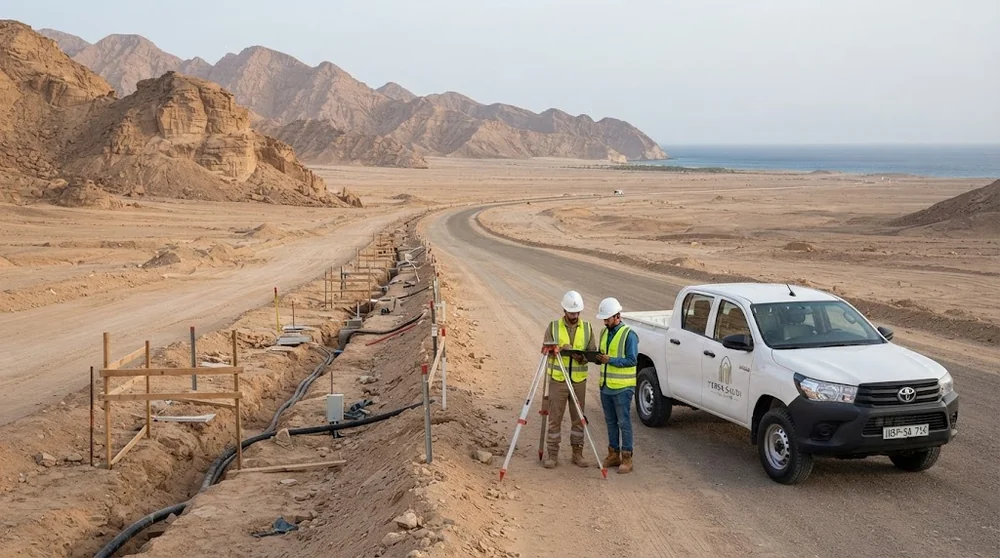
A building can be structurally complete and still be unusable. Residential and hospitality assets in a new region depend on a chain of connections and services, each delivered by different parties on different schedules. An asset cannot generate lawful income until the essential services and required approvals it depends on are in place, whether through permanent connections or approved interim arrangements. In a greenfield region, that chain is longer than in an established city.
NEOM has presented ENOWA as its energy and water company, but the party responsible for connecting a particular asset should be confirmed in project documents rather than assumed from regional announcements.
| Dependency | Responsible party (to confirm) | Evidence to request | Timing question | Consequence of delay |
|---|---|---|---|---|
| Power supply | Designated utility provider or NEOM entity | Connection agreement or capacity allocation | Connection date versus handover date | Unit cannot be occupied or operated |
| Potable water | Designated water provider | Supply confirmation for the plot or building | Is supply live at handover? | Occupancy permit and operations delayed |
| Wastewater | Utility or developer | Network connection or interim solution plan | Permanent or temporary arrangement? | Operating restrictions or extra costs |
| Road access | Infrastructure authority or master developer | Access route and completion schedule | Usable by residents and guests on handover? | Reduced demand and higher logistics costs |
| Transport links | Transport operator or authority | Service plans for airports, shuttles or transit | Scheduled versus operating service | Weaker tenant and visitor demand |
| Communications | Licensed telecom provider | Coverage and fibre connection plans | Available at handover? | Lower appeal to residents and remote workers |
| Operating approvals | Relevant licensing authorities | Occupancy, tourism or operating licences | Who applies and when? | No lawful letting or operation |
Progress at one piece of infrastructure should not be read as progress for the whole region. Announcements about activity at the Port of NEOM describe the port. Port progress does not establish completion of Oxagon as an industrial city, and it says nothing about the readiness of residential stock elsewhere. Contractor changes, environmental conditions in a mountainous coastal desert and broader regional disruption can also affect schedules; where such risks are material, ask the seller how they are reflected in the contract.
5. Assuming Foreign Ownership Is Automatically Available
Foreign ownership rules in Saudi Arabia changed significantly in 2026. REGA confirms that the updated system under the Law of Real Estate Ownership by Non-Saudis entered into force on 22 January 2026. The 22 January 2026 commencement of the updated non-Saudi ownership law does not, by itself, prove that any particular NEOM property is eligible for foreign ownership. Eligibility depends on who the buyer is, where the property sits and what right is being acquired.
As of October 2026, the updated framework works through implementing regulations, geographical provisions and an application process administered by REGA, with the Saudi Properties portal presented as the channel for non-Saudi applications. Rules of this kind are refined over time, so the version you rely on should be current on the date you sign, not the date an article or brochure was written. A property-specific eligibility workflow looks like this:
- Buyer category: confirm whether you are buying as a non-resident individual, a resident, a foreign company or a Saudi-registered entity, because each may be treated differently.
- Permitted right: identify whether the offer is full ownership, a lease, usufruct or another interest, and whether your category may hold it.
- Geographical provisions: check whether the property’s location falls within an area where non-Saudi ownership is permitted under the current regulations.
- Approvals: establish which approvals are required through the Saudi Properties portal or other official channels, and who submits them.
- Registration: confirm that the right can be registered in your name, and how and when registration happens.
- Seller authority: verify that the seller holds the right it is selling and may transfer it to a non-Saudi buyer.
Three concepts are often blurred. Direct property ownership means holding a registered right in your own name. Corporate investment means a company holds the asset, which brings its own licensing, governance and tax obligations, including potential zakat or corporate income tax administered by the Zakat, Tax and Customs Authority (ZATCA). Residence is a separate immigration matter; buying property does not automatically grant the right to live in Saudi Arabia, and residence routes such as Premium Residency have their own criteria.
If you are considering an off-plan purchase, ask whether the project is licensed under REGA’s off-plan sales framework and whether buyer payments go into a regulated escrow account. We present this conditionally because not every NEOM-linked opportunity is structured as a licensed off-plan sale, and a single regime should not be assumed to cover every offer. Transaction taxes also need checking. As of October 2026, ZATCA lists a 5% real estate transaction tax (RETT) rate under the current RETT law, which took effect on 10 April 2025, subject to applicable exemptions. For historical context only: the RETT regime was first introduced in October 2020 at the same 5% rate. Confirm the current rate and any exemptions directly with ZATCA at the time of purchase.
If your question is about whether your buyer category can hold a specific right in a NEOM-linked asset, a short one-to-one conversation can help you frame what to ask the seller and your lawyer.
A conversation with our team helps structure the questions, but it is not a legal opinion. Final confirmation of eligibility should come from the relevant authorities and from independent Saudi legal counsel acting for you.
6. Turning Growth Targets into Rental Forecasts
Large population and visitor targets are part of how giga-projects describe their ambition. Those targets are useful for understanding intent, but they are not evidence of paying demand for a specific unit. A population or visitor target describes what a programme hopes to attract, while demand evidence describes who is actually paying, at what price, for comparable space. A rental forecast should only rest on the second.
Demand evidence for a new region is thin by definition, which makes careful testing more important. We recommend checking the intended tenant segment (employees, contractors, tourists, long-term residents), whether that segment exists in meaningful numbers today, how much competing supply is planned nearby, and whether any occupancy or rate data from operating assets is available. Housing provided by employers for their own staff may meet a large share of early demand, which can limit the open rental market for private investors.
Costs matter as much as income. Recurring items include property management, maintenance, insurance, service charges, utility charges during vacancy, letting fees, and tax treatment depending on how the asset is held. In a remote region, maintenance and staffing costs may be higher than in established cities. The table below is a hypothetical illustration of how these elements interact. In the base case we assume 20 units of fixed costs (service charges, insurance, baseline maintenance) and variable costs of 10% of gross income (management and letting fees), giving 30 units. In the downside case variable costs fall with income to 8 units, but fixed costs rise to 27 units to reflect higher maintenance and staffing in a remote location, giving 35 units.
| Illustrative scenario | Gross income (units) | Operating costs (units) | Net operating result before financing and tax (units) | Comment |
|---|---|---|---|---|
| Base case | 100 | 30 (20 fixed + 10 variable) | 70 | Assumes stable occupancy and controlled costs |
| Downside case | 80 | 35 (27 fixed + 8 variable) | 45 | Lower occupancy or rates combined with higher fixed costs |
| Delayed handover | 0 | Usually limited before handover | Zero or slightly negative | No operating income until the asset is delivered and operating; holding cash outflows are counted separately (see below) |
All figures in this table are illustrative assumptions expressed in income units; they are not NEOM forecasts, prices, yields or promised returns. The table deliberately does not calculate a yield, because a yield requires a stated acquisition cost and none is assumed here. The point of the exercise is the shape of the result: a 20% fall in income combined with a modest rise in fixed costs cuts net operating income from 70 to 45 units, a fall of more than a third. In the delay scenario the operating result is roughly zero, but that is only part of the picture. Outside the operating result, payment instalments, financing interest and other holding cash outflows may continue during the delay, so your overall cash position can turn negative even while operating costs are small.
What this means for investors in practice: ask the seller for the assumptions behind any income projection, then build your own downside and delay cases before relying on the base case.
7. Ignoring Resale Restrictions and Exit Liquidity
An investment is only as flexible as its exit. In a new destination, the exit can be constrained by contract terms, buyer eligibility and the depth of the local market. An asking price is what a seller hopes to receive; only a completed, registered transaction shows what a buyer actually paid. Valuations sit in between and depend on the comparables and assumptions used.
We have not seen sufficient published transaction data to make a general statement about secondary market liquidity across NEOM as of October 2026, and different assets may carry very different terms. The practical checks are therefore asset-specific:
- Assignment consent: can you transfer an off-plan contract before handover, and does the developer require consent or charge a fee?
- Resale eligibility: who is permitted to buy from you, and does the pool include non-Saudi buyers under current rules?
- Outstanding obligations: which payment instalments, service charges or operating commitments pass to a new buyer?
- Buyer depth: how many potential buyers exist for this specific type of unit at this location?
- Financing availability: will Saudi lenders finance purchases of this asset type, which affects how many buyers can participate?
- Transaction costs: what taxes, registration fees, brokerage and legal costs apply on exit?
Timing risk compounds liquidity risk. If delivery is delayed, operating income is delayed too, and an exit that depends on a completed, income-producing asset moves back with it. A pre-handover assignment may still be possible where the contract and the developer allow it, but it usually depends on developer consent and on finding buyers willing to accept the same uncertainty, often at a discount. Concentrated local demand, where many units target a similar buyer profile, can also lengthen the time needed to sell. None of this means a resale is impossible; it means the exit route should be documented before purchase rather than assumed.
A Practical NEOM Due Diligence Checklist
The seven mistakes translate into a single document request. Based on our research, this is the minimum set of evidence to obtain before treating any NEOM-linked offer as an investable asset:
- Location and rights: plot or unit identifier, boundary confirmation, and the exact right offered.
- Seller authority: registration of the selling entity and proof of its authority to sell and transfer.
- Latest scope: current project scope and dated schedule, separated from historical announcements.
- Contractual handover: handover date, delay compensation, long-stop date and termination rights, alongside any applicable statutory protections.
- Funding evidence: evidence of committed funding for the specific project or phase.
- Applicable licence and payment protection: off-plan licence and escrow arrangements where relevant.
- Infrastructure dependencies: connection agreements and schedules for power, water, wastewater, access, transport and communications, including any interim arrangements.
- Ownership eligibility: current REGA rules applied to your buyer category, location and right.
- Cost assumptions: service charges, management, maintenance, insurance and tax treatment, with a downside case and separate holding costs.
- Exit terms: assignment consent, resale eligibility, transferable obligations and exit costs.
Hypothetical example, not a real client case: an investor receives an offer for a serviced apartment described as “part of NEOM”. The seller provides a brochure, a payment schedule and a reference to PIF backing, but no plot identifier, no off-plan licence number and no connection schedule for utilities. In this hypothetical, the missing evidence changes the next step. Instead of negotiating price, the investor asks in writing for the seller’s registration, the licence and escrow details, and the asset’s dependency schedule. If those documents cannot be produced, the enquiry stops at the evidence stage.
The checklist is designed to be used before money moves. A seller that holds the documents can usually provide them quickly; a seller that cannot provide them has told you something important about the asset.
If you would like help matching your investment goals, budget and timeframe against the evidence available for a specific giga-project opportunity, our short questionnaire is a good starting point.
Our team can review the evidence a seller provides and highlight gaps, but that review complements independent advice. We recommend appointing independent Saudi legal, tax and financial specialists who act solely for you before signing any agreement or transferring funds.

NEOM Masterplan FAQ
Is NEOM the same as The Line?
NEOM is a regional development programme in northwestern Saudi Arabia, while The Line is one component of that programme. Other destinations, including Oxagon, Trojena and Sindalah, have different industrial, tourism and infrastructure functions. Investors should identify the exact asset, location, contracting entity and development phase rather than use the NEOM name as a substitute for property-level due diligence.
When will the NEOM masterplan be completed?
A single completion date is not a reliable basis for evaluating the entire NEOM masterplan. As reviewed in October 2026, the official The Line page describes phased, demand-led development. Investors need dated milestones for the specific asset, its infrastructure dependencies and contractual handover obligations, with historical targets clearly separated from current commitments.
Has The Line been cancelled or delayed?
The official The Line page reviewed in October 2026 presents a continuing long-term vision delivered in phases. Separate media reporting during 2026, including by Semafor, has described delays and reprioritisation, but as of October 2026 we have not found official disclosures confirming it. These statements concern different evidence and scopes. Investors should attribute reported changes, check current official disclosures and avoid treating reports about one component as proof of an official delay or cancellation across NEOM.
Can foreigners buy property in NEOM?
Saudi Arabia’s updated non-Saudi property ownership system took effect on 22 January 2026, but that does not establish eligibility for every NEOM asset. Buyers must check current rules, their ownership category, the property’s location and permitted rights. Obtain property-specific confirmation from the relevant authorities and independent Saudi legal advice before signing or transferring funds.
What should I check before investing in NEOM?
Identify what you are acquiring, who can legally sell it and which rights the contract provides. Then verify current scope, funding, applicable licences, payment protections, infrastructure dependencies, demand assumptions, recurring costs and exit restrictions. Missing evidence should lead to further investigation rather than an assumption that the regional masterplan protects the individual investment.
Conclusion
The NEOM masterplan establishes strategic intent; a specific investment requires current evidence of rights, deliverability, demand and exit options. Our assessment is that the most reliable NEOM decisions start from the contract and the asset, then work outward to the masterplan, never the reverse. A regional area, a sponsor’s reputation or a historical target cannot replace a plot identifier, a registered seller, committed funding and enforceable protections.
Announced is not the same as delivered. Treat official statements, attributed reporting and our own assessments as different kinds of evidence, build downside and delay cases before relying on any projection, and document the exit route before you commit. Where a seller cannot supply the documents in our checklist, that gap is itself the most useful finding.
This article reflects research completed on 18 October 2026, and timelines, legal rules and tax rates should be rechecked before any decision. It provides general educational information only and is not individual financial, legal or tax advice. Please consult independent Saudi legal, tax and financial specialists before signing any agreement or transferring funds.
 Real estate in Georgia
 Real estate in Montenegro
 Real estate in Cyprus
 Real estate in the UAE
 Bali Real Estate
 Real estate in Thailand
 Real estate in Spain
 Real estate in Turkey
 Real estate in Zanzibar
 +155 545 10 467
 hello@property-saudi-arabia.com
 Saudi Arabia




 Get catalogue of TOP-7 objects