
 +155 545 10 467


Investors comparing the Red Sea Project with Jeddah Waterfront are weighing two different purchases under one coastal label. One is an operator-managed resort residence in a destination still being delivered in phases. The other is an urban apartment or villa in established Jeddah districts. Based on our research, the useful question is not which coastline looks better, but which specific asset’s ownership, permissions, costs and exit route you can verify before paying a deposit.
Jeddah Waterfront may suit investors prioritising established urban demand, rental flexibility and comparable resale evidence. The Red Sea Project may suit buyers seeking resort residences and long-term tourism exposure. Neither market offers a verified return advantage: the decision depends on ownership eligibility, delivery status, purchase price, operating restrictions, total costs and exit options.

Image alt: A property adviser and two buyers on a residential terrace overlooking the Red Sea
AI-generated illustration; it does not depict a specific project, property or client meeting.
Red Sea Project vs Jeddah Waterfront: Investor Comparison
The table below compares the two markets on identical criteria. It describes asset categories and evidence quality as of October 2026; it does not rank expected returns, because no comparable, unit-level income data reviewed for this article supports a return winner. A resort residence on an island and an apartment in a city district are different investment products, even when both face the same sea.
| Criterion | Red Sea Project (The Red Sea destination) | Jeddah Waterfront and coastal Jeddah districts |
|---|---|---|
| Typical asset | Resort villas and branded residences linked to hotels, developed by Red Sea Global | Completed apartments and villas near the Waterfront and in Al Shatie, Al Hamra and Obhur; future Jeddah Central units |
| Delivery status | Phased: developer announced first SLS homeowners on Shura Island on 27 April 2026; developer expects Laheq Island to open in 2028 | Completed resale stock exists; Jeddah Central is a planned masterplan, not delivered inventory |
| Demand base | Destination-led leisure travel and owner use | Urban residents, business travellers, events and some leisure demand |
| Buyer eligibility | Depends on buyer category, exact parcel and permitted rights under the framework in force since 22 January 2026 | Same national framework; parcel-level and zone verification still required |
| Rental model | Usually operator-managed letting within a Ministry-licensed hospitality facility or rental pool, subject to contract | Annual leases or furnished monthly residential lets; or licensed private hospitality stays, which carry stay-length and booking-channel limits (as of October 2026) |
| Operator control | Often high: brand standards, fees, owner-use windows, furnishing cycles | Usually lower for ordinary units; higher in serviced or branded buildings |
| Recurring costs | Service charges, operator fees, reserves, furnishing replacement, coastal maintenance | Service charges, maintenance, letting fees, vacancy and furnishing for short stays |
| Income evidence | Very thin public unit-level history as of October 2026 | More rental listings and transactions, but published yields mix districts and asset types |
| Exit route | Narrow pool of eligible buyers; resale may need operator consent | Wider buyer pool in principle; possible 2% non-Saudi disposition fee in Jeddah (as of October 2026); liquidity varies by building |
| Possible buyer fit (team assessment) | Long-horizon buyers wanting resort use plus tourism exposure | Buyers wanting to test current demand and keep letting options flexible |
What this means for investors in practice: urban Jeddah property may be the more testable option for current demand, while Red Sea residences may suit buyers who accept a longer evidence-building period. Both conclusions are conditional on the specific unit, price and contract.
What These Two Property Markets Actually Include
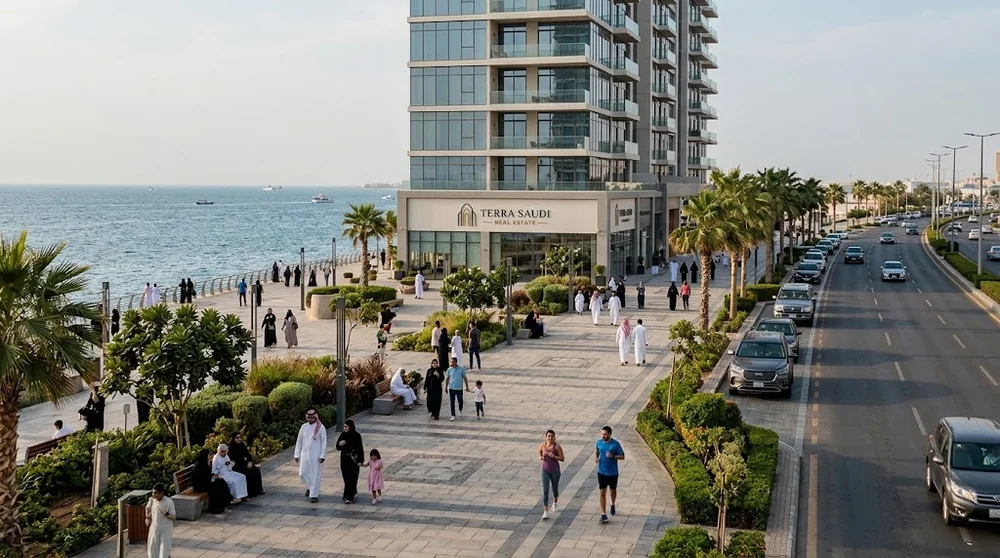
Image alt: AI-generated illustration of apartment buildings and a pedestrian promenade beside the Red Sea
AI-generated illustration; it is not a photograph of Jeddah Waterfront or of any property discussed here.
The Red Sea Is a Destination, Not All Saudi Red Sea Property
The Red Sea destination is one specific tourism project on Saudi Arabia’s western coast, developed by Red Sea Global; it is not a label for every property along the Saudi Red Sea. Red Sea Global also develops AMAALA, a separate destination with its own masterplan, so a reference to “RSG property” does not tell you which destination, island or product is involved. Within The Red Sea, residential offers have centred on Shura Island and, in the future, Laheq Island.
Product type matters as much as location. A branded residence is a home sold with a hotel brand’s name, services and usually an operator agreement. A coastal villa may or may not be branded. Buying a hotel room or a share in a hotel business is a different investment again, governed by business and hospitality contracts rather than ordinary residential ownership. A common misunderstanding we see: buyers treat “investing in the Red Sea” as investing in hotel performance, when a residence owner typically receives only what the management contract allocates.
Jeddah Waterfront Is Not Jeddah Central
Jeddah Waterfront, in the narrow sense, is the redeveloped public seafront along part of the Jeddah Corniche. Official tourism reporting lists several other coastal areas separately, including ROSHN Waterfront, Obhur Beach and the northern and central Corniche, so “the waterfront” is not one development. In this article we extend the comparison beyond the named Waterfront to the broader coastal property market in Al Shatie (also spelled Al Shati), Al Hamra and Obhur, because that is where most completed resale homes near the sea are found.
Jeddah Central, developed by the Jeddah Central Development Company, is a planned mixed-use masterplan in the central coastal area. Completed Corniche-area homes can be inspected, rented and compared today; Jeddah Central units are part of a future pipeline.
Al Shatie and Al Hamra are central, mature districts with seafront and inland streets; Obhur, further north, includes coastal villas, compounds and newer apartment stock. A district name does not mean a property is on the seafront, has a protected sea view or is permitted for short-stay letting. We recommend checking the exact plot position, view corridor, access road and building rules for each unit rather than relying on the district label.
Delivered Homes vs Announced Tourism Infrastructure
Announced is not the same as delivered — here’s the difference. An announcement records an intention; a hotel opening shows an operating business; a residential handover shows that a specific home has been transferred to an owner. These milestones are often blurred in marketing, so the ledger below keeps them separate and labels developer statements as such.
Shura and Laheq
Red Sea Global’s residential portfolio page (a developer statement, accessed October 2026) says Shura Island is planned to include 305 homes and that Laheq Island is expected to open in 2028. A Red Sea Global release from January 2025 described Shura residences as expected to be ready for initial handover by the end of 2025. A separate Red Sea Global announcement dated 27 April 2026 recorded the first homeowners at SLS-branded residences on Shura Island.
These are two different milestones: expected readiness for handover, and homeowners announced. Neither establishes the handover date of an individual unit, and neither, on its own, shows that a delay occurred. Actual handover dates, and any delay, can only be established from dated completion certificates, handover records or the delivery and remedy clauses in your own contract.
Existing Jeddah Stock and Jeddah Central
Completed apartments and villas in Al Shatie, Al Hamra and Obhur raise questions of condition, title and permissions rather than construction. Jeddah Central is different. The Jeddah Central Development Company project page and the Vision 2030 Jeddah Central project description set out planned parameters of 5.7 million square metres, a 9.5 km waterfront, a 2.1 km beach, 17,000 housing units and 2,700 hotel rooms. These are masterplan figures, not delivered inventory. Earlier communications referred to a phase target around end-2027; we could not confirm the current scope of that phase, so we treat it as a target for part of the project, not a completion date for the whole.
| Asset | Type | Dated evidence | Status (as of October 2026) | Not yet proven |
|---|---|---|---|---|
| Shura Island residences | Resort villas and branded residences | RSG residential page (developer statement, accessed October 2026); RSG announcement, 27 April 2026 | Developer states 305 homes planned and first SLS homeowners | Handover status of each unit; rental track record; resale depth |
| Earlier Shura statement | Developer expectation | RSG release, January 2025 | Developer expected readiness for initial handover by end-2025 | Actual handover date per unit; whether any delay occurred |
| Laheq Island | Future resort and residential island | RSG residential page (developer statement, accessed October 2026) | Developer expects opening in 2028 | Final product, pricing, operator terms, delivery date |
| Completed resale homes selected for comparison (Al Shatie, Al Hamra, Obhur) | Urban apartments and villas | Per unit: completion or occupancy documentation, title record, inspection report | Conditional on unit-level evidence | Lawful completion, registrable title, condition, short-stay permission |
| Jeddah Central | Mixed-use masterplan | JCDC project page; Vision 2030 project description (accessed October 2026) | Planned scale published | Current phase scope, unit delivery dates, sale terms |
Team assessment: an open resort tells you the destination functions; it does not tell you that the residence you are being offered is complete, registered or licensed for letting. Ask for evidence at the unit level every time.
Tourism Demand vs Year-Round Urban Demand
Destination-Led Resort Demand
Demand for a Red Sea residence depends on people choosing to travel to that specific destination, then choosing a residence over a hotel room. That is a narrower base than a city. Owner use, guest stays and seasonal patterns all affect available nights, and remote destinations add transfer time and cost for guests. We have not used flight schedules or route counts, because published access arrangements change and we could not verify a current schedule for October 2026. National hotel occupancy figures from GASTAT Tourism Establishments Statistics are useful background, but national hotel occupancy is not a reliable estimate of a resort residence’s occupancy, which depends on the rental pool size, pricing, operator distribution and the owner’s own use.
Jeddah’s Multiple Demand Sources
Jeddah draws on several demand streams: resident tenants, corporate relocations, business travel, events, domestic leisure and visitors passing through on the way to Makkah. That diversity can soften seasonal swings for ordinary rental property. It does not automatically translate into demand for premium Corniche apartments. Pilgrims and religious visitors have their own travel patterns, budgets and accommodation preferences, and counting their arrivals as demand for luxury waterfront short stays would overstate the market.
The practical test is unit-specific. An apartment let on an annual lease in Al Hamra competes for resident tenants; a licensed short-stay unit in Obhur competes with hotels and other licensed units; a branded residence competes with its own hotel. Concentration risk also differs: a resort residence may rely on a single operator and a single destination, while a city unit can usually switch between letting strategies if permissions allow. Off-season demand, new competing supply and delayed infrastructure should be tested for both markets rather than assumed away.
Compare Net Income, Not Headline Rental Yields
Evidence Standards
Published rental yields for Saudi cities often blend different districts, building ages and unit types, and some are gross figures before any costs. Applying a citywide Jeddah average to a specific seafront unit, or a hotel’s revenue per room to a branded residence, mixes incompatible measurement bases. Based on our research, published estimates for Jeddah use inconsistent samples, so we do not present a pooled percentage here. For the Red Sea, there is not yet a meaningful public record of residence-level net income as of October 2026.
Good evidence describes the same asset type, in the same building or a close comparable, over a stated period, on a stated basis (gross or net, before or after fees). Developer and operator projections are statements of expectation, not observed performance. Hotel revenue is not owner income; owner income is whatever remains after the operator’s contractual share and deductions.
A Consistent Underwriting Model
Two definitions keep the comparison honest. Gross rental yield is annual gross rent divided by the purchase price. Unlevered net operating yield on cost is annual net operating income divided by total acquisition and setup cost. The second measure excludes financing costs and investor-level taxes, which you should evaluate separately.
For tourist letting, start with 365 nights, subtract owner-use nights, multiply by expected occupancy and by the achieved nightly rate, then apply the revenue-sharing terms in the management contract. Deduct only costs the owner bears and that the contract has not already deducted, so that fees and reserves are not counted twice. For an ordinary lease, use the annual contracted rent, an allowance for vacancy and the owner’s costs.
| Input | Property A: Red Sea residence | Property B: Jeddah unit | Evidence to request |
|---|---|---|---|
| Purchase price | [enter] | [enter] | Sale agreement |
| Acquisition costs (RETT if contractually borne, fees, registration) | [enter] | [enter] | Contract cost allocation; ZATCA guidance |
| Furnishing and setup | [enter] | [enter] | Operator specification or quotes |
| Owner-use nights per year | [enter] | [enter or not applicable] | Management contract |
| Available rental nights or lease months | [calculate] | [calculate] | Contract and licence terms |
| Occupancy or vacancy assumption | [enter] | [enter] | Comparable unit records |
| Achieved nightly rate or annual rent | [enter] | [enter] | Booking or lease evidence |
| Operator share, management and distribution fees | [enter] | [enter] | Fee schedule and fee base |
| Community or service charges | [enter] | [enter] | Approved budget |
| Insurance and maintenance | [enter] | [enter] | Quotes; maintenance history |
| Replacement reserve | [enter] | [enter] | Reserve policy |
| Net operating income | [calculate] | [calculate] | Your model |
| Net operating yield on total cost | [calculate] | [calculate] | Your model |
| Exit costs at resale (not part of NOI) | [enter if applicable] | [enter if applicable, incl. possible 2% non-Saudi disposition fee] | Implementing regulations, Articles 9–10; adviser confirmation |
A Hypothetical Worked Example
The figures below are invented for teaching purposes only. They do not represent observed prices, rates or returns in either market.
- Purchase price SAR 2,000,000, plus SAR 150,000 of acquisition and setup costs: total cost SAR 2,150,000.
- 365 nights minus 30 owner-use nights leaves 335 available nights; at 55% occupancy that is about 184 let nights.
- 184 nights at SAR 1,200 gives gross room revenue of SAR 220,800 — a headline gross yield of 11.0% on price.
- If the contract allocates 60% to the owner, owner revenue is SAR 132,480.
- Owner-borne service charges (SAR 30,000), insurance and maintenance (SAR 8,000) and reserve (SAR 6,000) total SAR 44,000.
- Net operating income is SAR 88,480, an unlevered net operating yield on total cost of about 4.1%.
The same unit can therefore be marketed at 11% and underwritten at roughly 4%. Run each property through at least three cases: a base case, a lower-occupancy or longer-vacancy case, and a case with higher fees and a delayed first year of income.
Team assessment: personal use is a real benefit, but every night you stay is a night that cannot earn rent. Price owner use explicitly instead of hiding it inside an optimistic occupancy figure.
Foreign Ownership and Tourist Letting Are Separate
Buyer and Parcel Eligibility
The Real Estate General Authority (REGA) announced that Saudi Arabia’s updated property ownership framework for non-Saudis entered into force on 22 January 2026. REGA’s commencement notice described different applicant routes and referred to geographic documentation to follow; it was not proof that any particular parcel is open to a particular buyer. Foreign eligibility under the framework is not blanket permission to buy any waterfront property in the Red Sea Project or Jeddah. As of October 2026, we recommend checking the following through REGA’s ownership guidance, the Saudi Properties official portal and the applicable regulations:
- Your buyer category (resident, non-resident individual or company) and the route that applies to it.
- Whether the exact parcel sits in a zone currently open to your category, based on official documentation rather than a marketing map.
- The type of right being sold, such as freehold title, a long lease or a contractual right, and whether it can be registered in your name.
- For off-plan purchases, whether the project holds the required REGA off-plan sales licence and how buyer payments are protected.
- The Real Estate Transaction Tax (RETT): ZATCA states a 5% rate, subject to applicable exemptions, on the qualifying disposal value as of October 2026; who is legally liable under the RETT law and how your contract allocates it.
- The separate non-Saudi disposition fee described below, if your property is in one of the named cities.
RETT should not be assigned to the buyer automatically; legal liability and commercial allocation are separate questions. Buying property also does not automatically grant residency in Saudi Arabia; Premium Residency and other routes have their own criteria.
The Separate 2% Disposition Fee
The implementing regulations published on 3 July 2026 introduced, in Article 9, a separate 2% fee on qualifying dispositions by non-Saudis of property in Jeddah, Riyadh, Makkah and Madinah, and in Article 10, cases where a zero rate applies (as of October 2026). This fee is distinct from RETT. Jeddah is within its geographic scope; the Red Sea destination is not among the four named cities, but the parcel’s administrative position should still be confirmed.
For illustration only: if the fee applied to a sale at SAR 2,400,000, it would be SAR 48,000, on top of any RETT and transfer costs your contract assigns to you. Do not add it automatically to every buyer’s acquisition costs. Ask a Saudi tax or legal adviser to confirm whether it applies to your specific transaction, its base and whether an Article 10 case is available.
Rental Permission and Licensing
Owning a home and letting it to tourists are separate permissions. The Saudi Ministry of Tourism’s private hospitality unit guidance (accessed October 2026) states that a valid licence is required before operating, advertising or taking bookings, and that a non-Saudi owner may apply subject to conditions. Eligibility to apply for a licence is not the same as permission to operate. Under the September 2026 regulations, check the following as of October 2026:
- Operating category: a private hospitality unit is distinct from a unit within a Ministry-licensed hospitality facility such as a hotel or resort. A private-unit licence is not interchangeable with a hotel or resort operating licence.
- Stay limits: the same tourist may stay in the same private unit for no more than 29 consecutive days and 90 days in total during the licence period.
- Booking channel: bookings and guest payments must pass through the specified travel-and-tourism service provider, not direct private arrangements.
- Monthly leases are different: a furnished monthly let to a resident is a residential tenancy, not a private hospitality stay, and follows tenancy rules instead.
Building rules, community regulations and an operator’s management agreement can independently restrict letting. A branded residence contract may require you to let only through the operator’s pool; an ordinary Jeddah apartment’s owners’ association may limit short stays. Confirm rental permission at three levels: the licence, the building and the contract. If any is missing, the income case is unproven.
If you are unsure whether your buyer category can hold a specific parcel, or whether a unit can legally be let to tourists, a short one-to-one discussion of the documents usually clarifies what still needs checking.
Whatever answer you receive, keep the written basis for it: the regulation, licence or contract clause that supports it, dated to the month you checked. Rules in this area have changed several times during 2026.
Branded Residence Costs, Restrictions and Exit Risk

Image alt: A maintenance professional inspecting fittings on a coastal villa terrace
AI-generated illustration; not an inspection of any property mentioned in this article.
What the Operator Controls
A branded residence bundles a property with a service relationship. That relationship can protect standards and simplify management, but it also transfers control. We recommend checking these points in the actual documents, not the brochure:
- Rental pool versus individual letting: whether income is pooled across units or earned unit by unit, and whether you may let independently.
- Owner-use limits: how many nights you may stay, during which periods, and how far ahead you must book.
- Fees and fee base: whether fees are charged on gross revenue, net revenue or profit, and what deductions come first.
- Reserves: contributions to a replacement reserve, and who controls spending from it.
- Furnishing cycles: mandatory refurbishment intervals and the owner’s share of cost.
- Brand term: how long the brand licence lasts and what happens to the residence’s name and services when it ends.
- Termination: whether owners can replace the operator, and on what terms the operator can leave.
- Assignment and resale consent: transfer fees, operator approval rights and pre-emption rights.
- Eligible resale buyers: whether future buyers must meet the same ownership eligibility as you.
Coastal property carries its own maintenance load. Salt air, humidity and sun accelerate wear on metalwork, glazing, air-conditioning plant and outdoor finishes, so service charges and reserves should reflect a marine environment rather than an inland benchmark.
Who Could Buy Your Property Later?
Exit is where the two markets differ most. A Red Sea residence can only be sold to buyers who are eligible to hold that parcel, accept the operator’s terms and value the destination; that pool may be narrow while resale history is thin. Future phases, including Laheq Island, may add competing supply, and delays elsewhere in the destination could affect how existing residences look to the next buyer.
Jeddah generally offers a broader potential buyer pool, but broader urban demand is not a guarantee of liquidity for a particular unit. Older buildings, weak management, poor sea views or restrictive association rules can make a Corniche apartment slow to sell, and Jeddah Central could compete with existing stock as it delivers. A non-Saudi seller in Jeddah should also model the possible 2% disposition fee in the exit calculation, alongside RETT allocation and transfer costs. For both markets, ask for actual resales in the same building or scheme, with dates and time on market.
Team assessment: the resale question should be answered before the purchase, not after. If nobody can show you who has bought a comparable unit second-hand, treat liquidity as unknown rather than assumed.
Which Market Fits Your Investment Brief?
The matrix below is a team assessment of market fit by investor objective. It is not a statement of verified returns, and for several briefs the rational answer may be neither market yet.
| Investor brief | Possible fit (team assessment) | Evidence required | Reasons to reject |
|---|---|---|---|
| Current rental income | Completed Jeddah stock is more testable today | Signed leases or booking records for comparable units; building rules; net-income model | Only asking rents or gross yields available; short-stay use not permitted |
| Personal use plus rent | Red Sea residence or licensed Jeddah unit, depending on preference | Owner-use terms; available nights; operator fee schedule | Owner-use windows clash with your plans; income relies on peak nights you want to use |
| Long-term luxury resort exposure | Red Sea Project, for buyers with a long horizon | Unit handover evidence; registrable rights; brand term; phase timetable | Unit not handed over and no adequate payment protection; unclear resale consent |
| Limited management involvement | Operator-managed branded residence, or a professionally managed Jeddah lease | Full management contract; reporting standards; termination rights | Opaque fees; no right to audit statements or replace the operator |
| Early exit needed | Neither market is a natural fit; established Jeddah units are less uncertain | Dated resale transactions in the same building; eligible buyer pool; exit-cost model | No resale history; transfer restrictions; long completion timeline |
Choosing neither market for now is a legitimate outcome. Waiting for more handovers, resale records or licensing clarity can protect capital better than committing to a coastline in the abstract, and even a well-documented asset can be a poor investment at the wrong price.
To see which Saudi city, project type and budget band match your own investment goals, a short structured questionnaire helps us frame a relevant comparison.
Before You Reserve: Request a Verified Shortlist
A reservation deposit often creates pressure to proceed. Complete the steps below before that point, so that each property on your shortlist is supported by documents rather than marketing claims.
- Buyer brief and all-in budget. Define your objective, horizon, owner-use days and income goal, then set a budget that includes RETT where you bear it, fees, registration, furnishing and a first-year cash buffer.
- Eligibility. Confirm your buyer category and the exact parcel’s current status under REGA procedures, dated to the month of checking.
- Property and handover documents. Obtain the sale agreement, title or registrable-rights evidence, completion or handover certificate, inspection report and any off-plan licence and payment-protection details.
- Rental contract and permissions. Review the management agreement, building rules and the Ministry of Tourism operating category, stay limits and booking-channel rules for the specific unit.
- Comparables. Collect dated rental and resale evidence for the same building or a close comparable, on a stated gross or net basis.
- Downside and exit review. Model lower occupancy, higher fees and delayed income, then identify who could buy from you, under what transfer conditions and with which exit costs, including any non-Saudi disposition fee.
Stop the process if title or registrable rights cannot be evidenced, if the fee structure cannot be calculated, if tourist-letting rights are asserted but not documented at licence, building and contract level, or if income figures are promised without a verifiable mechanism. These are reasons to pause, not negotiating points.
If you would like us to compare two specific properties, share your buyer category, total budget, investment horizon, expected owner-use days and income goal. Our team will set out what the documents support, what remains unverified and which questions to put to the seller, without promising a particular outcome.
FAQ: Red Sea and Jeddah Property Investment
Can foreigners buy property in the Red Sea Project or Jeddah?
Eligible non-Saudi buyers can apply under Saudi Arabia’s property ownership framework, which entered into force on 22 January 2026. Eligibility is not a blanket permission for every waterfront property. As of October 2026, verify the buyer category, exact parcel, permitted property rights and registration requirements through REGA’s current procedures before paying a reservation deposit.
Is the Red Sea Project already open for property owners?
The Red Sea has operating tourism facilities, and Red Sea Global, the developer, announced the first SLS residence homeowners on Shura Island on 27 April 2026. This does not establish that every advertised residence is completed or handed over. As of October 2026, buyers should distinguish hotel openings, residential handovers and future phases, including Laheq’s developer-expected 2028 opening.
Which Jeddah waterfront areas should I compare?
The named Jeddah Waterfront is one stretch of the Corniche; Al Shatie, Al Hamra and Obhur are broader coastal districts that provide useful comparators, each with different buildings, access and rental audiences. Distinguish completed Corniche-area properties from the Jeddah Central pipeline, and compare exact units, verified views, building quality and operating permissions rather than district names.
Does Jeddah offer better rental returns than the Red Sea Project?
No comparable evidence reviewed for this brief establishes a reliable return advantage. Published Jeddah yields often describe broad residential samples, while resort residences depend on unit-specific prices, operator agreements, owner use and tourism performance. Compare annual net operating income against total acquisition cost using the same assumptions, and test vacancy, fee increases and delayed income separately.
Can a foreign owner rent a property to tourists?
Ownership and tourist accommodation permission are separate. As of October 2026, Ministry of Tourism guidance allows a non-Saudi owner to apply for a private hospitality unit licence subject to conditions. Private units are limited to 29 consecutive days and 90 total days per tourist in the same unit during the licence period, with bookings and payments through the specified service provider. Building rules and contracts must also permit letting.
What should I check before buying a branded residence?
Request the purchase agreement, title or registrable rights, delivery evidence, service-charge budget and any rental-management contract. Check owner-use limits, fee calculations, furnishing replacement, revenue allocation, operator termination and resale restrictions. Ask for documented unit-level income assumptions and an independent legal review. A hospitality brand does not itself establish investment performance, unrestricted use or an easy resale.
Conclusion
The Red Sea Project and Jeddah Waterfront answer different investment briefs. Completed homes near the Jeddah Waterfront and in Al Shatie, Al Hamra and Obhur offer a broader demand base and more rental and resale evidence to test, though a non-Saudi seller should model the possible 2% disposition fee. The Red Sea destination offers resort residences with long-term tourism exposure, but as of October 2026 its residential track record is short: the developer announced the first SLS homeowners on Shura Island in April 2026 and expects Laheq Island to open in 2028.
In our team’s assessment, neither market holds a verified return advantage. The deciding factors sit at unit level: ownership eligibility, registrable rights, delivery evidence, the correct tourist-letting category, the full cost stack, operator terms and a realistic exit. When those documents are complete, the comparison becomes straightforward. When they are not, waiting is a reasonable decision.
Disclaimer: This research is current as of October 2026 and is general information, not personalised legal, tax or financial advice. Ownership rules, licensing conditions, fees and project timetables can change. Developer statements are attributed as such and are not independent verification. Before committing funds, consult an appropriately qualified Saudi legal and tax adviser and a licensed real estate specialist, and verify current rules directly with REGA, ZATCA and the Saudi Ministry of Tourism.
 Real estate in Georgia
 Real estate in Montenegro
 Real estate in Cyprus
 Real estate in the UAE
 Bali Real Estate
 Real estate in Thailand
 Real estate in Spain
 Real estate in Turkey
 Real estate in Zanzibar
 +155 545 10 467
 hello@property-saudi-arabia.com
 Saudi Arabia



 Get catalogue of TOP-7 objects